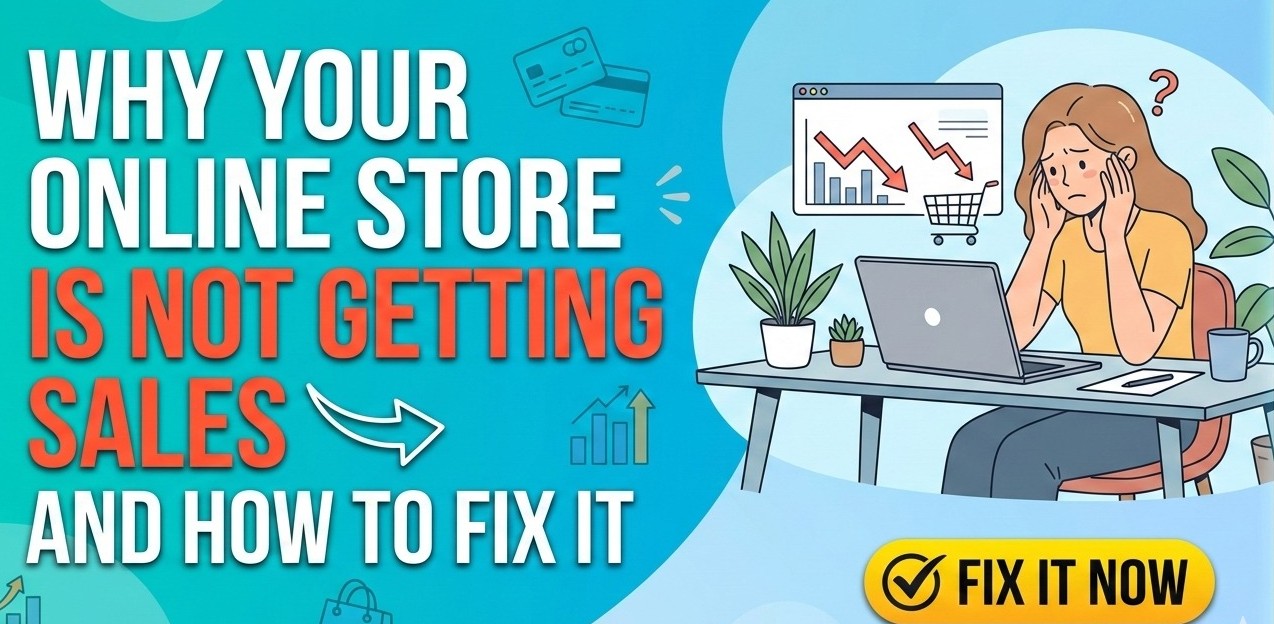
You launched your online store with excitement, invested in product photos, ran ads, and promoted it on Instagram - but the sales are still not coming. If this sounds familiar, you're not alone. Many startup founders, D2C brand owners, and small business entrepreneurs face the same frustration: "I'm getting traffic but no sales." The truth is, most online stores don't actually have a traffic problem - they have a conversion problem. In this blog, we'll uncover why your online store isn't generating sales, the hidden mistakes that are killing your conversions, and practical fixes you can implement immediately to turn your store into a strategic sales machine.
Table of Contents
You Have Traffic, But Your Store Lacks Trust
People don't buy from websites - they buy from brands they trust. If your online store looks generic, has no real brand story, doesn't show customer reviews, or has unclear policies, customers will leave even if your product is excellent. Today's buyers, especially in the 23–45 age group, are smart and cautious. Before purchasing, they check:
- Is this brand real?
- Are there genuine reviews?
- Is the payment secure?
- Can I return the product if needed?
The moment trust feels missing, sales stop.
To fix this, focus on building credibility. Add real customer reviews, clearly display your return and refund policy, show secure payment badges, and create an authentic "About Us" page that tells your brand story. Use original product and lifestyle photos instead of stock images.
For example, imagine two stores selling the same T-shirt: one includes lifestyle images, reviews, a size guide, and a brand story, while the other has just one plain image and no details. Which one would you buy from? The answer is obvious.
Your Website Design Is Confusing
Many business owners focus only on "making the website look good," but design is not decoration - it's direction. If your online store has too many pop-ups, a hard-to-find Add to Cart button, a messy layout, a cluttered homepage, or no clear categories, you are confusing your customer. And confused customers don't buy - they exit. A beautiful website means nothing if users can't easily understand where to click or what to do next.
To fix this, follow simple UX principles. Keep navigation clean with a clear menu, logical categories, and a visible search bar. Make your "Add to Cart" and "Buy Now" buttons obvious - they should be visible without too much scrolling, have strong contrast, and be easy to tap on mobile devices. Reduce clutter and avoid overwhelming visitors with too much information at once. Instead, guide them step-by-step through the buying journey. Strategic UX design doesn't just improve appearance - it directly increases conversions.
Your Website Is Slow (And Mobile-Unfriendly)
Here's a harsh truth: if your website takes more than 3 seconds to load, you're already losing sales. Most D2C buyers shop on mobile, and they have zero patience for slow or poorly optimized websites. If your store loads slowly, has broken layouts on phones, small hard-to-tap buttons, or is difficult to scroll, customers will leave before they even explore your products. Speed and mobile experience are no longer optional - they directly impact conversions.
To fix this, start by compressing large images, using lightweight themes, and removing unnecessary plugins that slow your site down. Optimize your store with a mobile-first design approach and test it across different screen sizes to ensure everything works smoothly. Remember, a fast website creates a better user experience - and better user experience leads to more sales.
Your Product Pages Don't Sell (They Just Inform)
Many online stores make a common mistake - they only describe products instead of actually selling them. Writing something like "Premium quality cotton T-shirt. Available in 3 colors." is not persuasive; it's just basic information. Modern buyers want more than features. They want to understand the benefits, feel an emotional connection, and clearly see how the product fits into their daily life. They are asking, "How does this help me?" not just "What is it made of?"
To fix this, shift from features to benefits. Instead of writing "Water bottle – 1 litre – steel," say "Keep your drinks cold for 12 hours - perfect for office, gym, and travel." Add bullet-point benefits, lifestyle images, FAQs, delivery timelines, size guides, and real customer photos to remove every possible doubt. Your product page should answer every question before the customer even thinks of asking it - because clarity builds confidence, and confidence drives sales.
Action Plan: Fix Your Online Store in 30 Days
If you want real improvement, you need a structured plan - not random changes. Here's a simple 30-day roadmap to fix your online store strategically.
- Week 1: Audit your homepage, strengthen trust elements like reviews and policies, and simplify navigation so users can easily find what they need.
- Week 2: Rewrite your product descriptions to focus on benefits, optimize product pages with better visuals and clarity, and add FAQs to remove buying doubts.
- Week 3: Focus on technical performance - improve website speed, optimize for mobile, remove clutter, and test your checkout process to ensure it's smooth and distraction-free.
- Week 4: Shift toward growth by setting up retargeting ads, adding email automation for abandoned carts, and tracking your conversion rate to measure improvements.
Remember, small strategic changes can significantly increase revenue - even a 1% increase in conversion rate can sometimes double your profits.
Frequently Asked Questions
1. Why is my online store getting traffic but no sales?
Usually due to poor UX, lack of trust signals, weak product pages, or slow website speed.
2. How can I increase conversions on my eCommerce website?
Improve trust elements, optimize product descriptions, simplify navigation, and speed up your website.
3. Does website design really affect online sales?
Yes. Strategic UX and conversion-focused design directly impact how many visitors turn into paying customers.
Conclusion
If your online store is not getting sales, it's not bad luck - it's usually due to weak trust signals, poor UX design, a slow website, an unclear value proposition, or the absence of a strategic sales funnel. The good news is that every one of these problems has a solution. When fixed strategically, your website can transform into your most powerful salesperson - working for your business 24/7 without breaks.
Ready to Turn Your Online Store Into a Sales Machine?
At Rapid Base Design, we don't just build websites - we create conversion-focused eCommerce stores, UX-driven layouts, SEO-optimized structures, and performance-based digital strategies designed for real business growth.
Whether you're launching a new store, redesigning an existing one, or aiming to improve conversions and revenue, let's build something that grows your business, not just your online presence.
👉 Contact Rapid Base Design today and let's fix your store strategically. 🚀