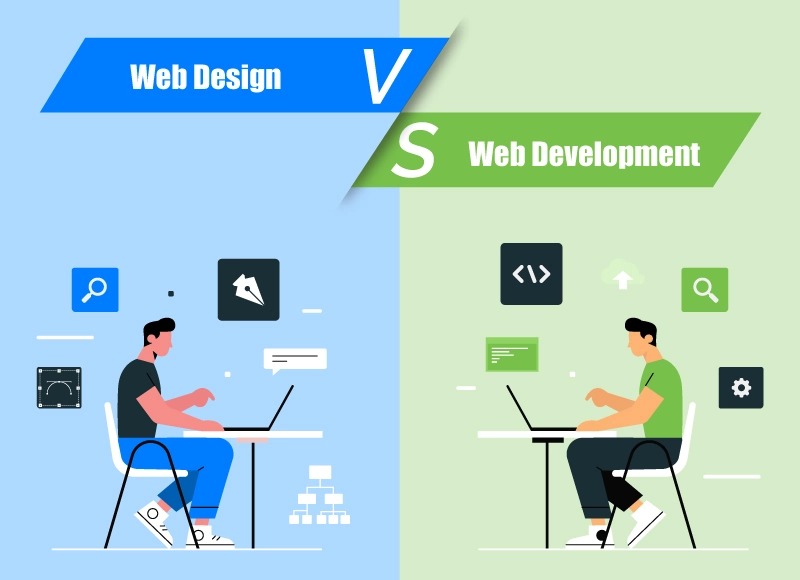
If you're a startup founder, business owner, or marketing head planning to build or redesign your website, you've probably come across two common terms: Website Design and Website Development. Many people assume they mean the same thing, but they actually serve very different purposes. Website design focuses on how your site looks, feels, and guides users, while website development handles the technical structure that makes everything function smoothly.
Understanding this difference is crucial for making smart business decisions. When you know what each role does, you can invest your budget wisely, avoid costly mistakes, and build a website that not only looks professional but also performs well. In this blog, we’ll break down website design vs website development in simple terms so you can choose the right approach for your business growth.
What is Website Design?
Website design is all about how your website looks, feels, and communicates your brand message. It focuses on the visual and experiential elements such as layout and structure, colors and typography, images and graphics, button placement, and the overall user journey. In simple words, website design is the visual and user experience side of your website, the part your visitors see and interact with first.
A professional website design is not just about making things look attractive. It ensures that visitors instantly trust your brand, clearly understand what you offer, and easily know what action to take, whether that’s filling out a form, booking a service, or making a purchase. Good design guides users smoothly from one section to another without confusion.
This is where UI UX design services play a crucial role. UI (User Interface) focuses on the visual elements, while UX (User Experience) ensures the journey is simple, logical, and conversion-focused. When done correctly, website design becomes a powerful tool that keeps visitors engaged longer and increases the chances of turning them into customers.
What is Website Development?
Website development is about how your website works behind the scenes. While design focuses on appearance, development handles the technical structure that makes everything function smoothly. It includes coding, database setup, server configuration, speed optimization, payment gateway integration, and adding custom features based on your business needs. In simple words, website development is the technical engine that powers your website.
Strong business website development ensures your site runs fast, remains secure, and performs properly across devices. Without proper development, your website may load slowly, crash frequently, not work correctly on mobile phones, have broken contact forms, or fail during high traffic. These issues directly impact user experience and can lead to lost leads and sales.
That’s why investing in professional web development services is critical for growing businesses. A well-developed website supports scalability, improves performance, and creates a stable foundation for SEO, marketing campaigns, and future expansion. Good development doesn’t just support your website, it supports your business growth.
Why This Difference Matters for Business Owners
As a founder or marketing head, you don’t need to understand coding languages or technical frameworks. However, you do need clarity on where your investment is going, why your current website isn’t generating leads or sales, and what your business actually requires to grow online. Without understanding the difference between design and development, many business owners end up spending money on the wrong solution, fixing visuals when the issue is technical, or upgrading backend systems when the real problem is poor user experience.
Many growing businesses face common website challenges: the site looks outdated, conversions are low, it isn’t mobile-friendly, pages load slowly, or the brand positioning feels unclear. These issues directly affect credibility and revenue. A slow or broken website pushes users away, while a poorly designed interface confuses visitors and reduces trust. In competitive industries like tech, e-commerce, real estate, or professional services, even small website flaws can lead to major opportunity loss.
Most of the time, the problem isn’t “just design” or “just development.” It’s a lack of strategy. A foundation, SEO structure, and conversion goals. When design and development work together under a clear business strategy, your website becomes more than a digital brochure, it becomes a growth engine for your brand.
Website Design: Business Impact
A professional website design does much more than make your website look attractive. It directly influences trust, conversions, and how your brand is positioned in the market. Let’s break down the three major business impacts:
1. First Impression
- Instant Trust or Rejection: Users form an opinion about your website within few seconds. Clean layout, modern visuals, and organized structure immediately build trust, while cluttered or outdated design creates doubt.
- Professional Credibility: Your website reflects your business standards. If the design looks cheap, users assume your service quality might be the same, even if that’s not true.
- Lower Bounce Rate: A visually appealing and well-structured website encourages visitors to explore further instead of leaving immediately. Better first impressions mean more engagement.
2. Conversions
- Clear Call-to-Action (CTA): Strategic landing page design services ensure buttons, forms, and offers are placed where users naturally look, increasing inquiries and sign-ups.
- Guided User Journey: Good design removes confusion. It smoothly guides visitors from problem awareness to solution, and finally to action (buy, book, contact).
- Psychological Influence: Design uses color psychology, spacing, typography, and visual hierarchy to influence decisions. Design is not decoration, it’s applied psychology that drives sales.
3. Brand Positioning
- Premium Perception: High-quality UI UX design services create a premium feel. This attracts serious clients, funded startups, and high-value customers.
- Competitive Advantage: In crowded industries, modern design helps you stand out. If your competitors look average and you look exceptional, you win attention.
- Long-Term Brand Authority: Consistent and professional website design strengthens brand identity. Over time, this builds recognition, trust, and authority in your market.
Website Development: Business Impact
While design attracts users, development ensures everything works smoothly behind the scenes. Strong web development services directly affect performance, scalability, and revenue, especially for growing businesses.
1. Performance & Speed
Performance and speed play a critical role in website development because they directly impact rankings, user experience, and conversions. Google prioritizes fast-loading websites, which means even the most SEO-friendly website design will struggle to rank if the backend is not properly optimized. Users expect pages to load within 2–3 seconds, and if your site is slow, they are likely to leave immediately, increasing bounce rates and reducing trust.
Speed also affects revenue, even a one-second delay can significantly lower conversions. Optimized web development ensures your website runs smoothly, keeps visitors engaged, and supports higher sales and lead generation.
2. Scalability
Scalability is essential for growing businesses because your website should expand as your company grows. Custom website development ensures your platform can handle new features, increased traffic, and evolving business needs without performance issues.
A scalable web architecture provides a strong technical foundation that supports traffic spikes during marketing campaigns, product launches, or paid ads without crashing. At the same time, secure backend systems protect customer data, payment information, and sensitive business details, building long-term trust and preventing costly downtime. Without proper scalability, your website may slow down or fail at the exact moment your business starts gaining momentum.
3. E-commerce Functionality
E-commerce functionality is a critical part of website development for product-based businesses because it directly affects revenue and customer experience. Strong ecommerce website development must include secure and seamless payment gateway integration, as even one payment failure can instantly cost you a sale. It should also have proper inventory and order management systems to ensure stock updates automatically and orders are processed efficiently without errors. Additionally, cart optimization helps reduce abandonment rates, while mobile responsiveness ensures customers can browse and complete purchases smoothly from any device. In e-commerce, every technical detail matters, one small issue can result in lost revenue and reduced customer trust.
In e-commerce, even one small technical issue can result in lost revenue. That’s why strong development is not optional, it's essential for business success.
How to Choose the Right Website Design Company
Choosing the right website design company is a critical decision for any growing business. Your website is not just a digital brochure, it’s a revenue-generating asset. The right agency will understand your business goals, focus on conversions, and build a website that supports long-term growth. Here’s what growth-oriented businesses should look for:
✔ Strategy-First Approach
- They ask about your target audience, revenue model, and conversion goals.
- They understand your industry before suggesting design solutions.
- They focus on business results, not just visuals.
✔ Clear Packages & Timelines
- Transparent pricing with no hidden costs.
- Defined scope of work and realistic delivery timelines.
- Clear communication and structured process.
✔ SEO & Performance Focus
- Offer SEO-friendly website design from the start.
- Include speed optimization and mobile responsiveness.
- Implement basic technical SEO for better search visibility.
✔ Long-Term Support
- Provide maintenance and ongoing optimization.
- Act as a growth partner, not just a one-time vendor.
- Help you scale as your business expands.
Design vs Development: Final Comparison
Before making a decision, it’s important to understand that website design and website development serve different purposes, but both are essential for business success. Design focuses on how your website looks and how users experience it, while development ensures everything functions smoothly behind the scenes. You don’t choose one over the other, you integrate both to build a high-performing, conversion-focused website.
| Website Design | Website Development |
|---|---|
| Visual layout | Coding & backend |
| User experience | Functionality |
| Branding & UI | Technical performance |
| Conversion psychology | Speed & scalability |
A successful website combines strong visual appeal with powerful technical performance. When design and development work together strategically, your website not only attracts visitors, it converts them into customers.
Conclusion
Website design and website development are two different but equally important pillars of your digital presence. Design shapes how your brand is perceived and how users experience your website, while development ensures everything works smoothly, securely, and efficiently. For a business that wants to compete and grow online, both must work together strategically.
If you’re aiming for high-converting landing pages, scalable business website development, premium UI/UX, strong ecommerce functionality, and long-term growth, you need a balanced approach, not just attractive visuals or just technical coding. A successful website blends strategy, design, performance, and conversion psychology into one powerful platform.
At Rapid Base Design, we work with startups, entrepreneurs, and growing businesses that want modern, conversion-focused websites built to generate leads and scale brands. If you're planning to build, upgrade, or completely transform your website, connect with Rapid Base Design today, and let’s create a website that doesn’t just look good, but delivers real business results.
Ready to Build a High-Performing Website?
Connect with Rapid Base Design today and start building a website that delivers real business results.